
Twenty minutes into a long ride to dinner, the tape lifts off your neckline, and you spend the evening adjusting your dress so nobody notices.
Quick take: Tape sticks to fabric, so on warm skin it starts lifting while you are still out. Skin-safe body glue keeps the same neckline, pallu, or sock exactly where you placed it, for hours. The step most people skip: wait 45 to 60 seconds until the layer feels tacky before pressing.
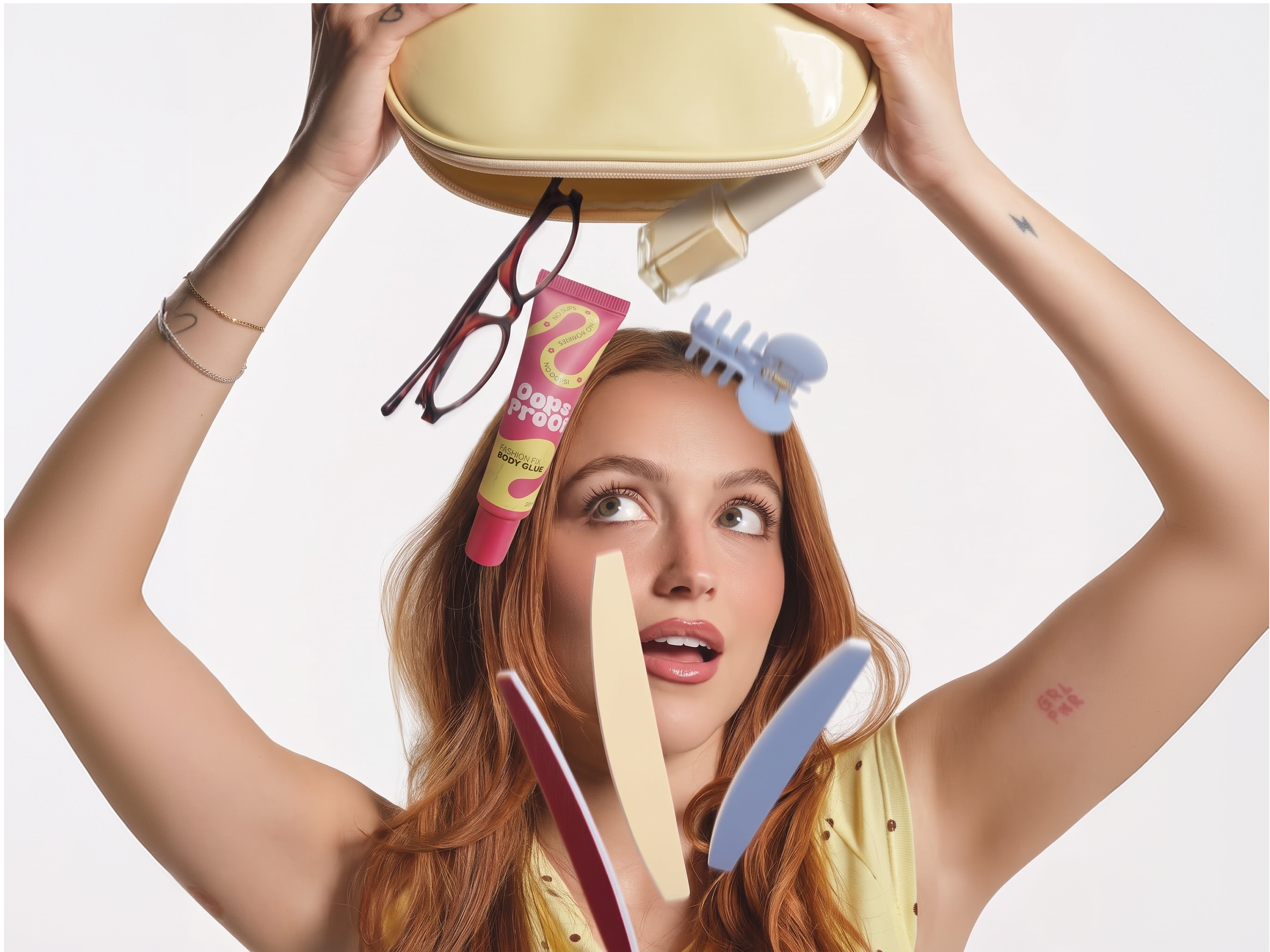
The Moment Nobody Plans For
Body glue vs fashion tape for risky outfits is not really a question about stickiness. Ask anyone who has worn a backless dress through a full day and they will tell you the outfit was never the problem. The staying power was.
You chose the blouse because it looks good, not because you wanted a second job holding it up. You bend for your keys and the neckline drops. You reach across a table and the shoulder slides off. One photo later, the strap has travelled an inch.
By hour three you have built a second outfit underneath the first: arms crossed, bag clamped to your chest, one hand resting casually on the collarbone. Nothing has actually gone wrong. You have just quietly left the room.
Why Tape Rests on the Surface While Glue Bonds to Skin
Watch a tape strip after two hours on warm skin. It softens, then curls at one edge, then lets go. None of that is a fault in the tape, because it was built for fabric touching fabric, like hemming a pant before alterations or keeping a wrap dress closed in a studio.
Skin is a different surface. It moves, warms, and produces moisture all day, which a thin film resting on top of it cannot handle for long. A curled edge travels fast under chiffon, net, or anything light enough to move on its own.
Skin-friendly body glue works from the other direction. Spread a thin layer where the fabric needs to sit, let it turn tacky, then press. The bond forms with your skin, so when you bend, laugh, or sit through a long lunch, the fabric moves the way you do instead of staying behind.
Skip the tacky wait and you trap air under the layer. Air pockets are the single most common reason body glue fails on a first try, and they have nothing to do with the formula.
Tape also does not let the skin underneath breathe. Leave a strip on through a long commute under a lined blouse and you will usually find a faint mark in exactly the square where it sat.
You will know tape is about to give up when:
- The strip feels warm and slightly slippy under your thumb
- One corner has started to curl upward
- A faint glossy edge shows through the fabric in photos
- The fabric shifts every time you breathe in deeply
Lined blouses are the sneaky version of this problem. Tape holds beautifully to the lining and lets go of the outer layer instead, so you feel secure for an hour while the visible layer drifts on its own.
Body Glue vs Fashion Tape for Risky Outfits, Side by Side
Same outfit, same day, same humidity. Here is where the two part ways.
| What you are comparing | Body glue | Fashion tape |
|---|---|---|
| What it bonds to | Skin first, then fabric, jewellery, or a sock presses onto it | Fabric to fabric, or fabric resting loosely on skin |
| Behaviour through heat and movement | Holds around 6 to 8 hours, sweat-resistant but not waterproof | Softens as skin warms, then lifts |
| Visibility | Dries clear, invisible under chiffon and net | A glossy edge can catch light in photos |
| Getting it off | Water and a cloth, no scrubbing | Peels in stretches and can leave sticky patches |
| How far one purchase goes | 50 to 60 applications across a 3-year shelf life | One strip, one wear |
| Best suited to | Backless blouses, plunging necklines, pallu, straps, bandana, socks, jewellery | Quick fabric-to-fabric fixes indoors |
Look at which column asks less of you. Tape needs a cool, still, dry version of your day. Glue needs 45 seconds of patience before you leave the house. If you want the longer version of this comparison, how each one behaves through a full day of real wear goes deeper on humidity and fabric weight.
Monsoon changes the maths. On a sticky day, tape softens faster because the skin beneath it never fully dries. Body glue copes better with that, though it is still worth patch testing on the inner arm if you have never worn it before an outdoor event.
Tape holds two pieces of fabric together. A risky outfit needs fabric held to you, and that is a completely different job.
Matching the Fix to What You Are Wearing
Plunging necklines and backless blouses. Check the fabric before you attach anything. A fitted backless blouse holds its own shape, slippery georgette does not. For the slippery kind, apply small dots along the edge rather than one long strip, so the drape stays soft instead of pulling flat. This is also where tape loses most often, because a neckline moves with every breath and tape does not stretch with it.
Saree pallu, blouse edges, and jewellery. A pallu slips at the shoulder line, which is the one place you cannot correct politely in public. A single, thin on the shoulder, pressed where the pallu is draped the way you want it, keeps the fall intact. The same approach settles a maang-tikka that keeps sliding back, a bandana on a windy day, or a dupatta that refuses to stay put.
Straps, socks, and long days on your feet. A sock rolling down is the quietest version of this whole problem, and tape does nothing for it. One small dot at the heel and one at the sock top keeps it steady through a day of walking. If travel days are your weak spot, these 45-second fixes for caps, necklines, and straps that slide cover the packing version of the same routine.
Frequently Asked Questions
Is body glue better than fashion tape for a backless blouse?
For most backless blouses, yes. The outfit needs fabric held to skin, not fabric held to fabric, and that is the job tape was never built for. If your back moves a lot, or you will be sitting and standing for hours, glue is the safer choice.
How long does body glue actually last on a risky outfit?
Around 6 to 8 hours of normal wear, which covers a workday, a dinner, or a long commute home. It is sweat-resistant rather than waterproof, so plan a quick check if you will be dancing outdoors for hours.
Does sweat stop body glue from working?
Not in the way it stops tape. Sweat dissolves the tack on a tape strip long before the evening is over. Glue handles perspiration far better, though heavy moisture is a different story, so do not apply it on damp skin and do not swim in it.
Can I use body glue on jewellery instead of tape?
Yes, and it suits jewellery better. A maang-tikka, a heavy earring back, or a bandana knot all need to stay in one spot without visible hardware. Tape leaves a shiny strip that shows up in close-up photos.
Is body glue safe for daily use, and how do I take it off?
Patch test first: a small amount on the inner arm, wait 24 hours, and check for any reaction. If your skin is happy, you are good to go. Removal is water and a cloth, wipe it and the layer comes away clean, with no scrubbing and no sticky patches left on your fabric.
How to Choose
- If you will be out more than three hours, moving, sitting, or sweating, body glue is the right pick. If it is a ten-minute fabric-to-fabric fix in an air-conditioned room, tape still works fine.
- Test it on an outfit you already own before an occasion that matters. Our OopsProof body glue uses aloe vera and glycerine, dries invisible under thin fabric, and one tube gives you 50 to 60 applications across its 3-year shelf life, so the cost per wear stays low enough that you stop rationing it.
- Still deciding? Read why OopsProof holds longer and wipes off cleaner than other body glue brands before you commit to a full-size tube.

