
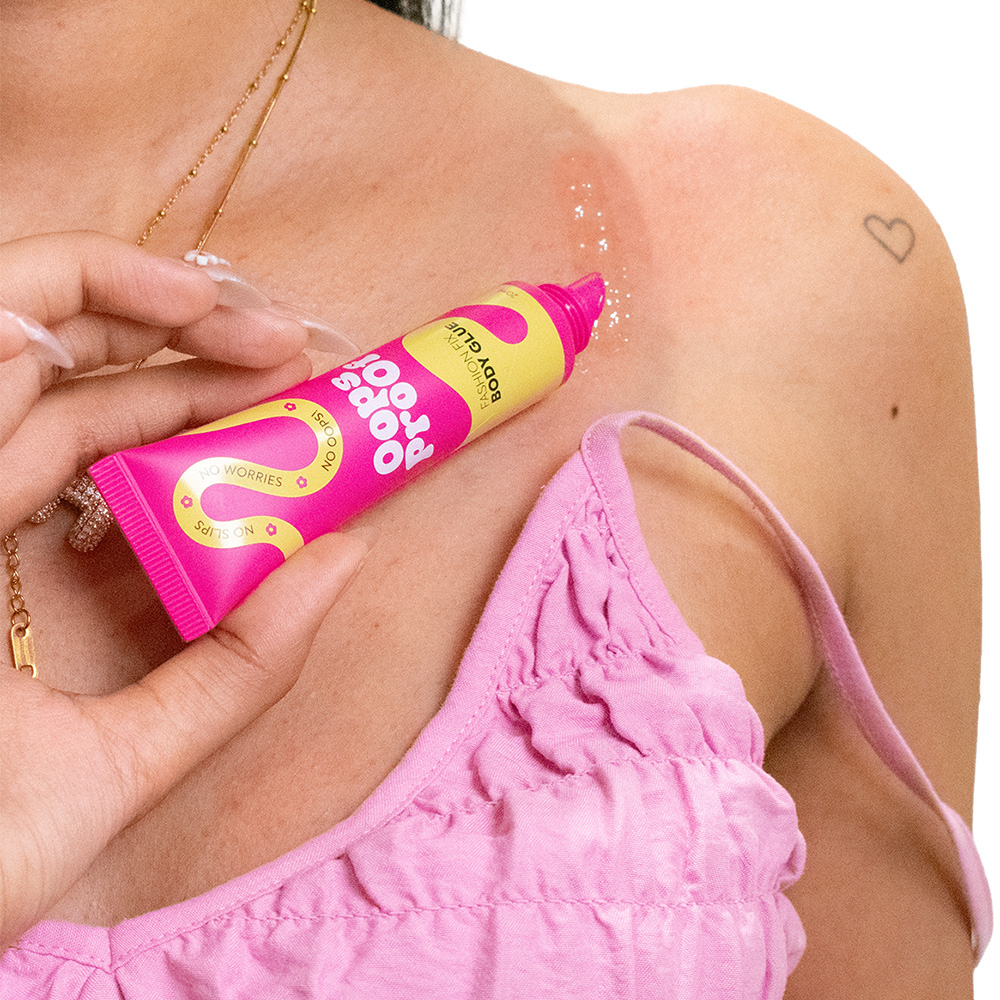
You've read the ingredients list three times, Googled half the words, and you're still wondering if sticking something to your skin for 10 hours is actually okay.
Quick take: Body glue made for skin is safe when used correctly and removed properly. Dermatologists confirm that these formulas sit on the outer surface of your skin without reaching deeper layers. Problems usually come from overuse or skipping a patch test, not from the glue itself.
Why Skin Safety Concerns Exist in the First Place
The worry makes sense. You're putting something sticky directly on your body, wearing it through sweat and movement, then taking it off hours later. Most people picture glue as a permanent bond with a strong chemical smell, something to fix a broken mug rather than something to wear.
Body glue for clothing and fashion is a different kind of product. It's made specifically to sit on human skin and hold fabric in place without causing harm. Most of the confusion comes down to two things:
- Some people accidentally reach for the wrong product, like eyelash glue or a general purpose glue not meant for skin, and end up with a reaction
- Stories circulate about rashes or peeling, usually from skipping the proper removal steps.
When you use body glue that's actually formulated for skin, you're working with a product designed for temporary external wear.
What Dermatologists Actually Say About Body Glue
Dermatologists focus on two things: what the product does to your skin and how you use it.
The outer layer of your skin is made up of cells that are constantly renewing themselves, shedding and replacing over roughly a month long cycle. Body glue sits on top of this surface without soaking into the living skin underneath. Used correctly, it bonds to cells that are already on their way out naturally, which is part of why it lifts off so cleanly.
The key phrase: when used correctly. Dermatologists point out that most reactions come from user error, not the glue itself. Here's what they recommend:
| What to do | Why it matters |
|---|---|
| Clean skin with an alcohol wipe first | Removes oils that can trap bacteria underneath |
| Rinse off with water once you're done | Most body glue is water soluble, so it loosens easily without harsh scrubbing |
| Remove with oil-based remover, never force-peel | Forcing removal can strip healthy skin cells and cause redness |
| Skip the same spot for 24 hours between uses | Gives skin time to complete its natural recovery |
One dermatologist compared it to wearing a bandage. The glue itself isn't harmful, but wearing it in the exact same spot every single day, with no break, can irritate even healthy skin.
How Often You Can Safely Use Body Glue
This is where most advice gets vague. Dermatologists give a clearer answer: use it when you need it, rotate where you wear it, and take breaks between events.
If you're wearing backless outfits three nights in a row, choose slightly different spots each time. Your shoulder blades one night, your side ribs the next. This keeps the same patch of skin from being covered repeatedly before it's had a chance to recover.
For regular users, dancers, performers, anyone who wears revealing styles often, a good rule of thumb is 3 to 4 times per week maximum on any single area. Your skin needs time without anything on it.
Daily use in the exact same spot is where problems start. Not because the glue is harsh, but because that patch of skin isn't getting a chance to breathe and finish its normal cycle.
Which Skin Types Need Extra Care
Not all skin reacts the same way. If you have sensitive skin, eczema, or active breakouts, a few adjustments help.
Sensitive skin: Do a patch test 24 hours before your event. Apply a small amount to your inner wrist, leave it for 2 hours, rinse it off, and watch for redness or itching. If your skin stays calm, you're good to use it elsewhere.
Skin conditions: Avoid using glue directly over an active flare up. It won't make the condition worse, but removal can irritate skin that's already inflamed. Choose a spot where your skin is currently clear.
Oily skin: You'll actually run into fewer problems overall. The main thing to watch is bond strength, since oil on the skin can shorten stick time. Clean thoroughly with alcohol beforehand.
Dry or mature skin: Moisturize the surrounding area, not the exact spot, before your event. Dry skin can feel tight once glue is on it, and hydrating nearby skin reduces that discomfort without affecting the hold.
The pattern dermatologists see across skin types is consistent. Problems tend to happen when people skip the prep step, not because of the glue formula itself.
Smart Application Habits That Prevent Issues
Safety Safety isn't just about the product. It's about how you use it. These habits eliminate most skin concerns:
- Start with clean, dry skin. Use an alcohol wipe or toner to remove oils, lotion, and sweat. Wait about 60 seconds for the skin to fully dry.
- Apply in thin lines, not dots. Dots create thick spots that take longer to dry and can trap moisture. Thin lines spread evenly and bond faster.
- Let it set for about 60 seconds before pressing fabric down. Touch it lightly. If it feels tacky but not wet, it's ready. Pressing too early smears the product and weakens the hold.
- Remove with warm water first. Most body glue is water soluble, so a damp cloth or a quick rinse loosens it without much effort. For a stubborn spot, a little oil on a cotton pad can help too. Never force or yank it off.
- Wash the area afterward. Use mild soap and water to remove any leftover residue, pat dry, and apply a light moisturizer if your skin feels tight.
Following these steps makes body glue about as safe as wearing makeup or jewelry for the day. It touches your skin temporarily, does its job, and comes off without a trace when removed correctly.
Frequently Asked Questions
Can body glue cause allergic reactions? Reactions are rare but possible, usually from fragrance or lower quality ingredients in cheaper formulas. Well made body glue tends to use gentler, skin friendly bases that rarely trigger a reaction. If you have known sensitivities, always patch test first.
Is it safe to use body glue on your face? Yes. Most body glues are hypoallergenic and safe for facial skin too. That said, facial skin is more sensitive than the rest of your body, so always do a patch test before your first full use, even if the product is labeled safe for face use.
What happens if you leave body glue on overnight? Leaving it on for 12 to 16 hours won't harm your skin, but it does get harder to remove as the bond strengthens. Where possible, take it off before bed so your skin gets a full night without anything on it.
Does body glue clog pores? No, not when it's used and removed correctly. Body glue sits on top of the skin rather than sinking into pores, and rinsing it off fully afterward keeps things clear.
How do you know if your skin is reacting badly? Normal: slight warmth while it's on, or mild redness after removal that fades within about 10 minutes. Not normal: burning, itching that lasts more than 30 minutes, raised bumps, or blistering. If you notice any of these, remove the glue right away and rinse the area with cool water.
Try This Today
- Run a patch test tonight. Apply a small amount of body glue to your inner forearm, leave it for 2 hours, rinse it off, and check your skin in the morning. No reaction means you're clear to use it for your next event.
- Focus on removal, not just application. Most skin issues come from how the glue is taken off, not how it's put on. A simple water rinse goes a long way toward preventing irritation.
- Check your current glue. If what you're using doesn't specifically say it's made for skin, it's worth switching to one that is. Oopsproof, for example, makes a body glue formulated with aloe vera and glycerin for sensitive skin, holding for 10+ hours without redness or residue when used and removed correctly.

