
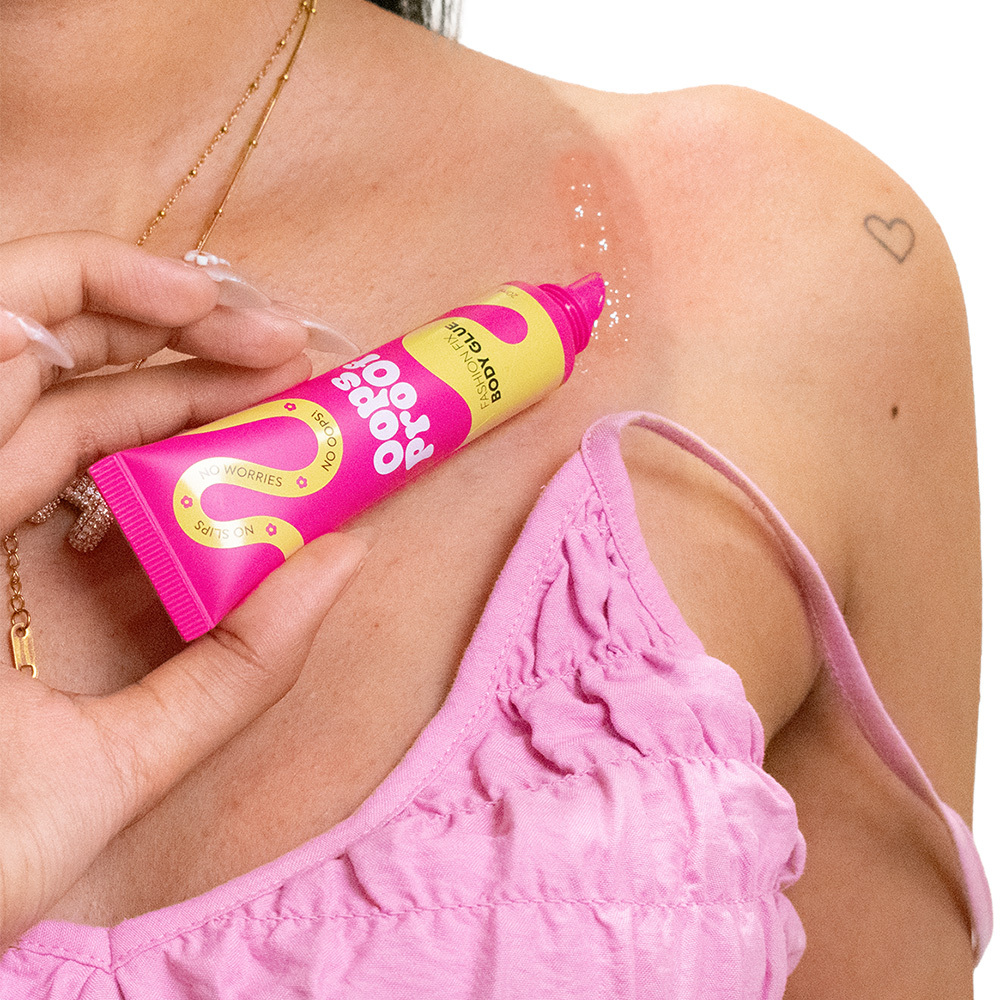
You applied body glue in the morning, felt confident through the ceremony — and by hour four, your skin was red, itchy, and nothing like the label promised.
Quick take: Most body glue reactions aren't caused by the formula — they're caused by applying over unclean skin, broken skin, or without a patch test. A skin-friendly body glue with aloe vera and glycerine holds 5–6 hours without irritation when applied correctly. Skip prep, and even a gentle formula can cause a reaction.
Why Skin Reactions Happen Even With 'Safe' Body Glue
Here's what most guides skip: skin safety isn't just about the ingredient list. It's about the condition of your skin at the moment of application. Oily skin, freshly shaved skin, or skin with micro-cuts creates a very different surface than clean, dry, intact skin — and the same formula behaves completely differently across those conditions.
The reaction pattern is almost always the same. Someone applies body glue over moisturiser they forgot to wipe off. The adhesive can't bond properly, so it sits on the surface longer, traps heat, and the extended contact time causes irritation. They blame the product. The real issue was a 30-second prep step they skipped.
Two other triggers show up constantly: applying over a large area in one go (which increases total skin contact before the formula sets), and peeling the glue off dry instead of dissolving it with warm water first. Both are avoidable — and neither has anything to do with the formula being unsafe.
5 Skin Safety Checks Before You Apply Body Glue
- Do a patch test 24 hours before a big event. Apply a small amount to your inner wrist or the inside of your elbow. If there's no redness, itching, or swelling after 24 hours, your skin is responding well to that formula. This single step eliminates almost every surprise reaction — and it takes about 10 seconds to do.
- Check the ingredient list for aloe vera and glycerine. These two do more than sound gentle — aloe vera actively soothes the skin barrier during adhesive contact, while glycerine retains moisture so the skin underneath doesn't dry out over hours of wear. A skin-friendly body glue that lists both is formulated to hold without compromising the surface beneath it.
- Clean skin before applying — not just 'dry' skin. Wipe the application area with a clean cloth to remove sweat, body oil, and any residue from moisturiser or sunscreen. Body oils aren't visible, but they're always there — and they sit between the glue and your skin, weakening the bond and extending the time the formula stays wet on the surface, which is when irritation is most likely.
- Avoid broken, sunburned, or freshly shaved skin. This sounds obvious until you're getting ready for a beach wedding and your back is slightly pink from yesterday. Compromised skin has a disrupted barrier — meaning the formula contacts deeper layers than intended. Even the gentlest body glue should go nowhere near a fresh shave, a wax from that morning, or any area with active irritation.
- Apply in thin lines, not thick coverage. Thick application takes longer to set, traps more heat against the skin, and is harder to remove cleanly. Thin lines bond faster, hold just as well, and peel off or dissolve without pulling at the skin surface. When you apply correctly — as shown in this step-by-step guide on how to use body glue for a full-day hold — you also reduce the total surface area in contact with adhesive, which lowers irritation risk across the board.
What the Ingredient List Actually Tells You
Most people glance at an ingredient label and look for words they recognise. That's a reasonable instinct, but it misses the thing that actually matters for skin safety: what the formula is not using.
| Ingredient | What it does | Skin safety signal |
|---|---|---|
| Aloe vera | Soothes and cools skin on contact | Good — actively protective |
| Glycerine | Locks in moisture under the bond | Good — prevents dryness during wear |
| Harsh solvents | Speed up bonding | Risk — can strip the skin barrier |
| Synthetic fragrance | Masks chemical smell | Risk — common irritant, especially under heat |
| Water-soluble base | Dissolves cleanly with warm water | Good — easier, gentler removal |
A water-soluble formula is the detail most ingredient labels bury. It matters because removal is where most skin damage actually happens — not application. If you have to scrub, peel, or use a separate solvent to get body glue off, you're damaging the skin surface every single time. A formula that rinses off with warm water skips that entirely.
A rash at hour four isn't a product failure — it's a prep failure. Skin safety starts before you open the tube.
The Removal Step Most People Get Wrong
Peeling body glue off dry skin is the fastest way to cause redness, even with a skin-friendly formula. The adhesive bonds to the surface layer of skin cells — not deeply, but enough that a dry peel drags those cells with it. Do this repeatedly across an event season and you'll notice the skin in that area becomes sensitive over time.
Warm water dissolves the bond first. Thirty seconds of warm water on the area, then gentle peeling from one edge — that's the full process. No scrubbing, no acetone, no baby oil required. If you're curious whether your specific fabric is also safe during removal, this breakdown of how body glue behaves across different fabrics covers what peels clean versus what stains.
At Oops Proof, we've found that most customers who report irritation are removing the glue dry — not reacting to the formula itself. When the same person switches to the warm-water removal method, the irritation disappears. That's not anecdotal; it's consistent enough that we made warm-water removal a core part of how we describe the product.
Frequently Asked Questions
Can I use body glue if I have sensitive skin?
Yes, but do the patch test first — always. Sensitive skin reacts to contact time and removal method more than to gentle formulas. Apply to a small area, leave for the same duration you'd wear it at an event, then remove with warm water. If there's no reaction after 24 hours, you're clear to use it more broadly.
Is body glue safe to use near the chest or under the bust?
Skin-friendly body glue is safe for most body areas including the chest, under the bust, and along the sides — these are actually the most common use areas. Avoid applying directly over nipples or any area with broken skin. Apply to the fabric edge rather than directly on the most sensitive skin where possible.
How long can body glue safely stay on skin?
A well-formulated skin-friendly body glue holds safely for 5–6 hours under normal conditions. Wearing it longer doesn't automatically cause harm, but sweat buildup under the bond can cause mild irritation in some skin types after the 6-hour mark. For events longer than 6 hours, reapply fresh rather than leaving the original application on continuously.
What should I do if I get a reaction?
Remove the glue immediately using warm water — no peeling. Rinse the area thoroughly, then apply a plain, fragrance-free moisturiser. If redness persists beyond a few hours or blistering appears, see a doctor. Mild redness that fades within 30–60 minutes of removal is usually a contact reaction from extended wear or dry removal, not an allergy.
Does body glue expire, and does old glue affect skin safety?
Yes — body glue has a shelf life, typically around 3 years from manufacture. Expired formula can change in consistency and pH, which increases the chance of skin irritation. Check the batch date before using a tube you've had for a while, especially if the texture seems thicker or stringier than usual.
Try This Today
- Do a patch test right now — apply a small amount of body glue to your inner wrist, leave it for 20 minutes, then remove with warm water. That's the full skin safety check, and it takes less time than reading another review.
- Read how application technique affects both hold and skin safety — this guide on which body glue ingredients hold without rashes or burns goes deeper on what to look for in a formula before you buy.
- Try Oops Proof body glue — formulated with aloe vera and glycerine, water-soluble for clean removal, and built to hold 5–6 hours on real skin in real conditions. Visit oopsproof.co to pick up a tube before your next event.

