
Halfway through the hundred, your tank top has crept up to your bra band and your instructor is cueing ribs down. You reach for the fabric. The cue is gone.
Quick take: Every mid-set outfit adjustment costs you the alignment you were holding, and a reformer spring won't wait for you to finish tugging. Loose cotton and stretched elastic make it worse on a mat. Secure the moving pieces before you lie down, then start your reps.
Why Pilates Exposes a Slipping Outfit Faster Than a Gym Session Does
Nobody warns you that learning how to do pilates comes with a wardrobe problem. You learn the breathing, you memorise the order, and then you spend the whole class pushing a strap back onto your shoulder.
Here's the difference between a mat and a treadmill. On a run, fabric settles into one position and stays there. Pilates changes your relationship with gravity every few breaths. Roll-ups, bridges, side-lying leg work, four-point kneeling and teasers all put your clothing in a fresh argument with gravity.
Most beginners answer this by buying tighter activewear. Tighter isn't grip. A tight strap still travels; you just feel every millimetre of the journey, which is worse.
Five things slip first:
- Sports bra straps that creep toward your elbow during side-lying work
- Tank and tee hems that ride up the moment your hips lift for a bridge
- Socks that roll down at the leg halfway through footwork
- Waistbands that twist when you rotate through a supine twist
- Necklines that gap every time you hinge forward
None of these are fit problems. They're friction problems. Cotton against damp skin has almost nothing to hold onto, so the movement gets worse as the class goes on, not better.
Watch a mat class for ten minutes and you'll spot the pattern. The person tugging at her bra strap is usually the person whose ribs have flared, because her hands left her body and went to her clothes.
Secure the Moving Pieces Before You Lie Down on the Mat
Most advice on how to do pilates starts with the moves. The setup begins earlier than that. The fix takes a minute and happens fully dressed, before class, not mid-set.
Begin with clean, dry skin. Sweat, moisturiser and body lotion all sit between you and a reliable hold, so if you've just walked in from a commute, wipe the area and give it a moment to dry.
Apply a thin, even line along the zone that has to stay put. Under the bra strap where it crosses your shoulder. Along the tank hem at the front and both sides. Along the edge of the sock if it rolls. Not a dot, and definitely not a blob. A thin line covers the whole zone, and the whole zone is what has to hold.
Wait 45 to 60 seconds until the line feels tacky under your fingertip. This is the step most people rush, and rushing it is why the first attempt fails. Press the fabric down once it's tacky, hold for a few seconds, then test it the way you'd test a new recipe: roll your shoulders, hinge forward, lift into a bridge.
For the full walkthrough on straps, shorts and socks, our guide to body glue fixes for gym straps, shorts and socks takes it piece by piece.
Adjust Your Form, Not Your Clothes
Set up properly and a class runs itself. Four habits keep it that way:
- Check before every new position. Thirty seconds in a bridge is plenty of time for a hem to travel.
- Finish the rep first. If something slips mid-set, complete the movement, then reset. Stopping to tug resets nothing.
- Keep your hands on your ribs, not your waistband. Your hands are the feedback loop.
- Reapply once for a double session. Sweat is the one thing that eventually eases any grip, so a second thin line between classes is normal.
The dance world runs into the same wall. Gymwear and dance costumes develop identical wardrobe issues for one reason: constant movement plus friction-free fabric.
You don't need a stronger core to do Pilates. You need your clothes to stay exactly where you put them, so your hands can stay on your ribs.
What to Look For in a Grip That Survives a Full Class
Grip is the unglamorous half of how to do pilates. Before you buy anything, know which parts of your outfit actually move.
| What slips | Where the line goes | How to test it |
|---|---|---|
| Sports bra strap | Along the strap where it meets your shoulder | Shrug five times |
| Tank or tee hem | Along the front hem and both side seams | Lift into a bridge |
| Sock | Inside the heel and along the cuff | Stand and shift weight side to side |
| Waistband | Along the back band where it twists | Sit and rotate |
| Neckline | Along both edges of the neckline | Hinge forward and reach |
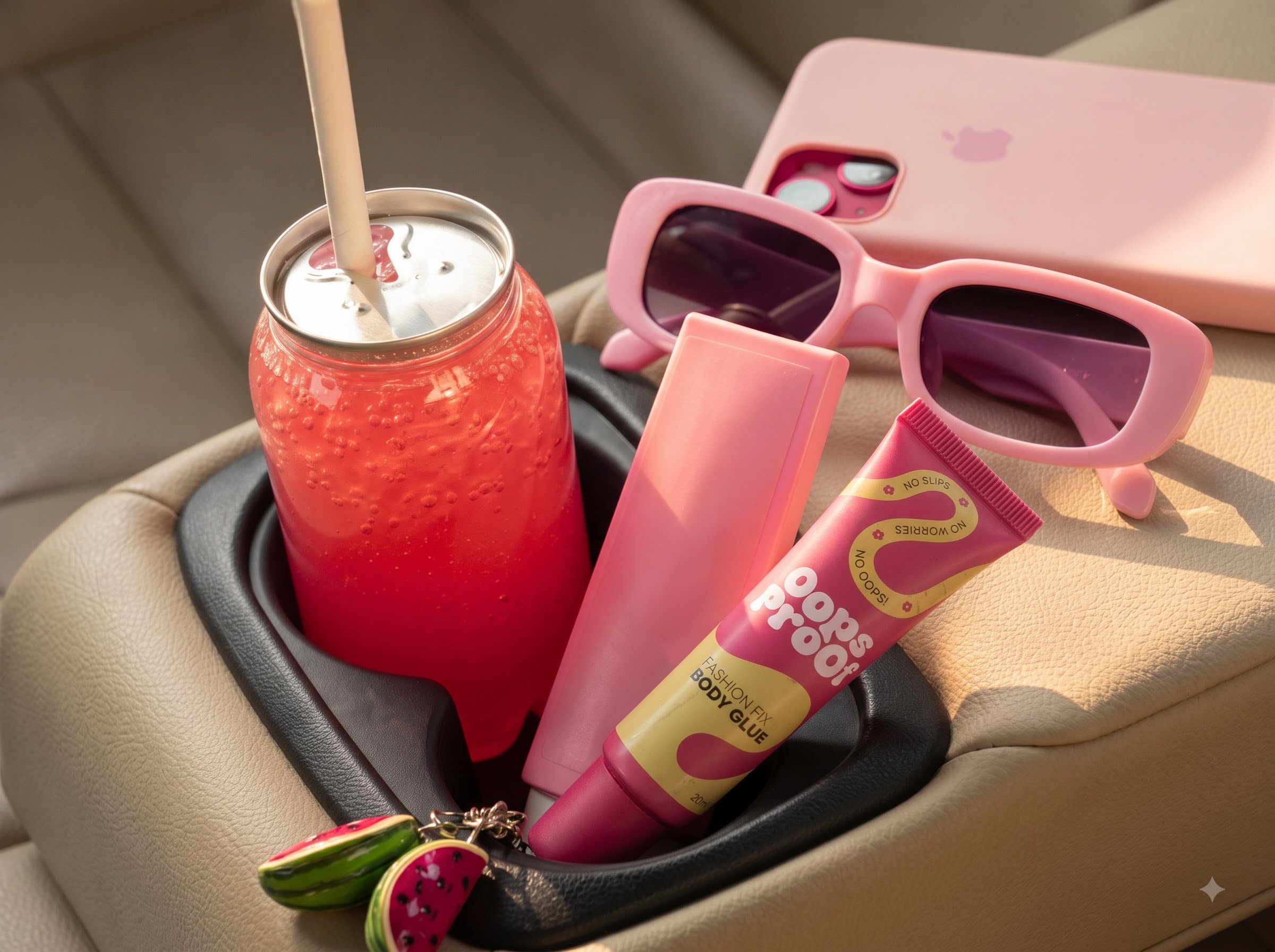
That list is what we built OopsProof around. Our body glue uses a skin-friendly formula with aloe vera and glycerine, it's lab tested, and it dries transparent so nothing shows under a pale tank. One tube covers roughly 50 to 60 applications, and a single set application holds 6 to 8 hours, which takes you through class, the ride home and coffee after.
Two honest caveats. It's sweat-resistant, not waterproof, so a heated studio plus a heavy session will eventually loosen the hold, and you simply reapply. Always patch test first: a small amount on your inner arm, wait 24 hours, no reaction, and you're clear.
Frequently Asked Questions
Do I need special clothing to learn how to do Pilates?
No. Anything fitted enough that you can see your own alignment works. The one upgrade worth considering is a top that doesn't ride up, since you'll spend less time fixing it. Leggings, a tank and socks, that's the whole kit.
Will body glue hold through a hot reformer class?
For a standard 45 to 60 minute session, yes. Skin-friendly body glue is sweat-resistant, which handles normal class sweat. In a heated studio or back-to-back sessions, apply a fresh line in between.
Can I apply it on skin that's already sweaty?
Wipe first. A damp or moisturised surface weakens the bond. Clean, dry skin gives you the hold you applied it for.
Does it leave residue on activewear?
Not on activewear. It's water-soluble. When class is done, wet a cloth and wipe the area; the product dissolves and comes away. If a mark lingers on the fabric, rinse the cloth and rub with mild soap.
Is it safe for sensitive skin?
It's lab tested and made with aloe vera and glycerine, which is gentler than the harsh formulas people expect. Patch test anyway, every time you open a new tube.
Try this today
- Do the mirror test in your class outfit: ten roll-ups and one bridge at home. Note exactly which pieces move, and where.
- Read where fashion tape quits and body glue keeps holding if you're still deciding which tool to keep in your bag.
- Patch test tonight. Then keep a tube of OopsProof body glue in your gym bag, next to your socks, so the fix is always within reach.

