
The tape looked invisible in the studio mirror. Two hours under set lights later, its edges had curled, caught lint, and lifted off a neckline the stylist was now fixing between takes.
Quick take: Double-sided fashion tape can hold a fabric edge, but sweat, heat and movement often make it lift and show. Body glue bonds cloth to skin instead, so necklines, straps, pallus and dupattas stay where you put them. Pick by garment and fabric, not by habit.
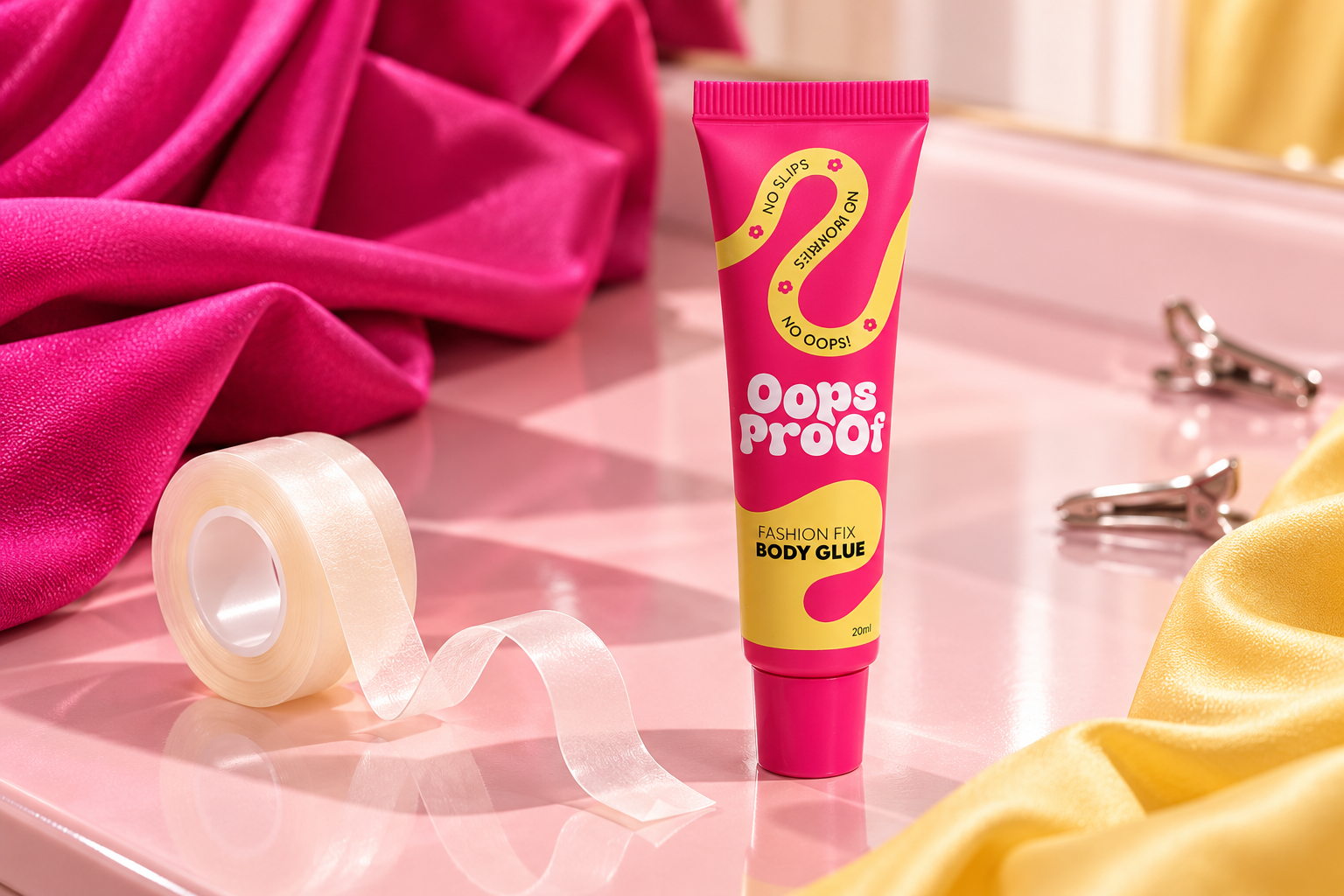
Why Double-Sided Fashion Tape Starts Failing Mid-Event
Tape does one job well: holding two flat surfaces together. On a hem, a wrap-dress opening, or a placket that keeps gaping, it behaves.
The job changes when it meets skin. Holding fabric against a warm, moving body for six hours is not the same as closing a seam. Oil and moisture sit between the strip and the surface, the temperature swings from car to hall, and every bend tugs at the corners.
So the middle holds while the edges curl. Flash photography finds the white line. You spend the evening checking instead of enjoying, and nobody warns you about that part.
What a Body Adhesive for Clothes Does Differently
Here is the shift. Tape joins fabric to fabric. A body adhesive for clothes joins fabric to skin, leaving no gap for movement to work into.
That is why a fashion stylist suggesting body glue over double-sided fashion tape usually points at the same set of problems: plunging necklines, off-shoulder sleeves, slipping straps, a saree pallu or dupatta that will not sit, a bandana, a backless blouse, jewellery that rotates, socks that creep down.
Think of it as a fashion tape alternative for skin, not for cloth. OopsProof Body Glue dries transparent, so nothing shows at the fabric edge. We build it with aloe vera and glycerine and it is lab tested. Water and a cloth lift it at the end of the night, no scrubbing, no residue.
Body Glue vs Fashion Tape: Which Wins Where
Run your own styling question through this.
| What you are fixing | Double-sided fashion tape | Body glue for clothes |
|---|---|---|
| Fabric to fabric: hem, wrap seam, gaping placket | Reliable | Wrong tool |
| Fabric to skin: neckline, strap, tube top | Holds briefly on cool, dry skin | Holds through sweat and movement |
| Saree pallu, dupatta, bandana | Slips as pleats shift | Stays put on clean, dry skin |
| Backless blouse, jewellery, socks | Edges show, fiddly to place | Invisible and adjustable |
Two honest caveats. Tape is not the enemy; on a dry fabric edge in air conditioning it works. Neither option grips reliably on satin or leather, though, because the cloth surface itself resists. Your garment, your fabric and your skin decide the answer. For the long version, how body glue and tape behave on risky necklines and pallus breaks it down outfit by outfit.
Most styling failures are not about the outfit. They are about a fix that was never designed for skin in the first place.
Application: 45 to 60 Seconds That Decide Everything
Most disappointing results come from rushed application, not a weak product.
- Clean, dry, lotion-free skin only. Moisturiser sits between the glue and you.
- A thin, even line along the whole area. One dot will not hold fabric.
- Wait 45 to 60 seconds until it feels tacky. Do not press early.
- Press the fabric on and hold for 5 to 10 seconds, then bend and stretch to test the hold.
- Patch test on your inner arm 24 hours before a big day out.
Hold and sweat resistance depend on all five steps. Rush the tacky wait and you will blame the product for a mistake made in a hurry.
Frequently Asked Questions
Is body glue a replacement for double-sided fashion tape?
For fabric-to-fabric jobs, keep the tape. As a double-sided fashion tape alternative for skin, body glue usually wins, because sweat and oil leave tape nothing firm to grip.
Will it show under a light or sheer outfit?
It dries transparent, so it does not read as a strip at the edge the way tape can. A thin line is all you need anyway.
How long does OopsProof Body Glue hold?
Usually six to eight hours. Heat, sweat and movement shorten that, so reapply for a longer night.
Does removal hurt?
No pulling. Wipe with water and a cloth and it dissolves, then ease the fabric away.
How to choose
- Test by surface. Both sides fabric? Tape stays sensible. One side your skin? Switch to body glue.
- Try it on a long day. Carry a tube of OopsProof Body Glue for the next work event or long dinner. A single tube covers 50 to 60 uses, so the cost per fix is a few rupees.
- Compare before you commit. See what actually holds up in real-life wear before you retire the tape drawer.

